
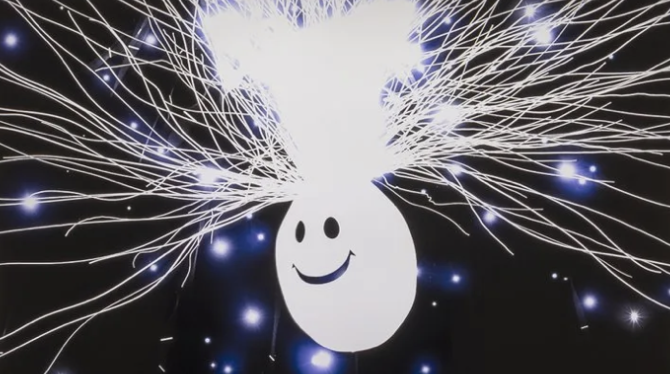
Gregory Kalliche: "Anvil" at KAJE, New York
Gregory Kalliche's "Anvil" at KAJE in Gowanus uses CGI animation, immersive architecture, and orthographic camera techniques to explore how vision, perception, and image-making are constructed through technological and physical lenses.
A critical review of Gregory Kalliche's exhibition at KAJE in Gowanus, examining how the orthographic camera, a tool native to commercial 3D modeling that eliminates depth perception, becomes the conceptual engine of the work. The piece traces how Kalliche uses this flattened virtual lens alongside architectural staging, synchronized lighting, and layered UV-printed acrylic to propose that vision itself is a construction of lenses and architecture. The piece closes with a reflection on how brand consolidation employs similar visual mechanisms to restructure perception.
Published in Dear Dave Magazine, 2025
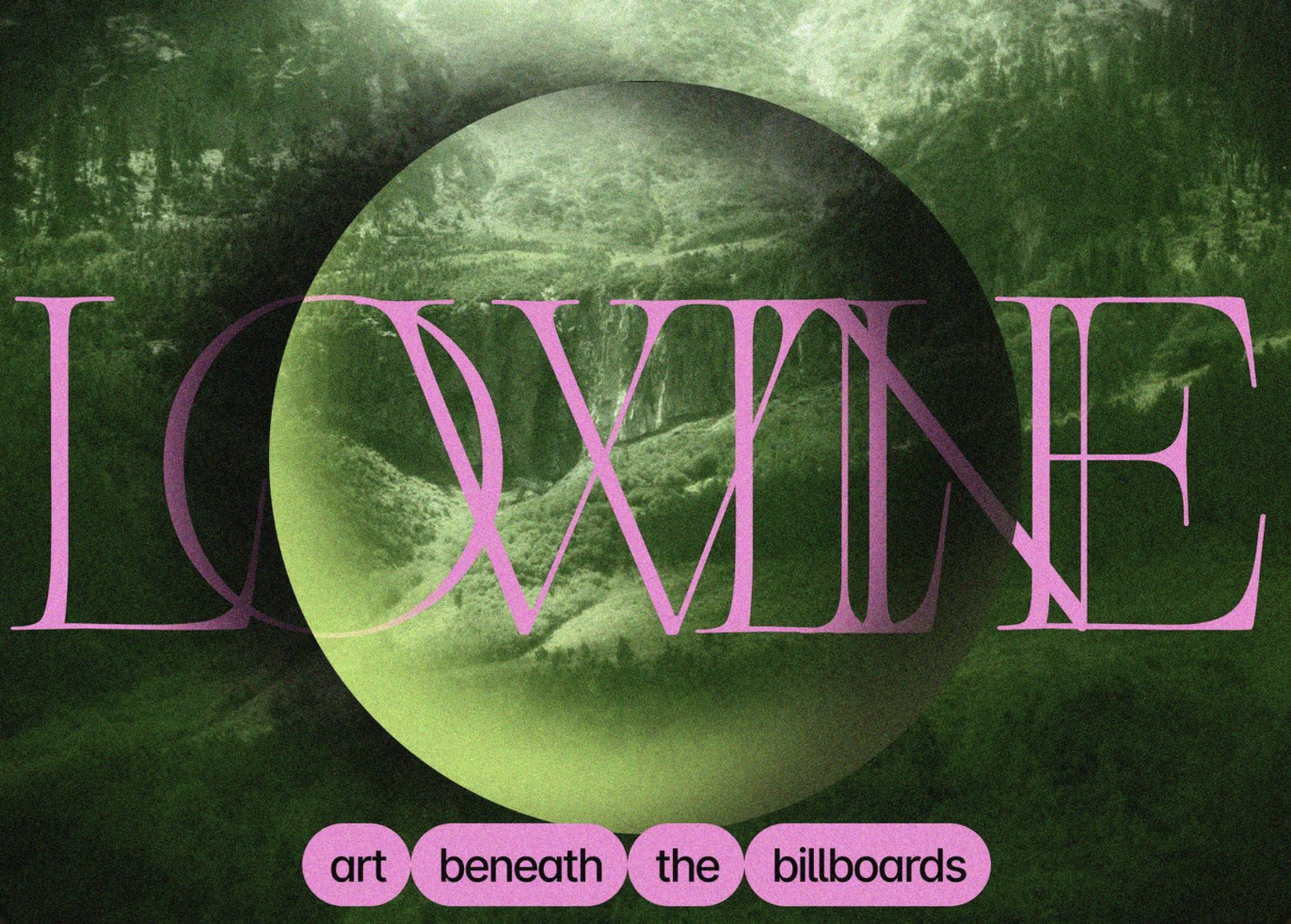
PWA's Lowline: A Digital Revival of the Times Square Show
Artists reclaiming abandoned urban infrastructure— tracing a line from Colab's 1980 Times Square Show to today's digital art underground.
A profile of Public Works Administration's Lowline exhibition— a digital art show staged in an abandoned retail space inside the 50th Street subway station. The piece traces a lineage from Colab's legendary 1980 Times Square Show to PWA's contemporary approach, examining how artists reclaim neglected urban infrastructure to build community outside commercial frameworks. Drawing on Samuel Delany's distinction between "contact" and "networking," the essay argues that spaces like PWA create meaningful cultural exchange by bringing together NFT-native artists and established digital media pioneers. The exhibition itself explored nature as a subject mediated through technology, featuring eight artists working across video, digital painting, and installation. Includes an interview with original Times Square Show organizer Jane Dickson on the cyclical relationship between artists, real estate, and urban redevelopment.
Published in ZORA ZINE, 2022.
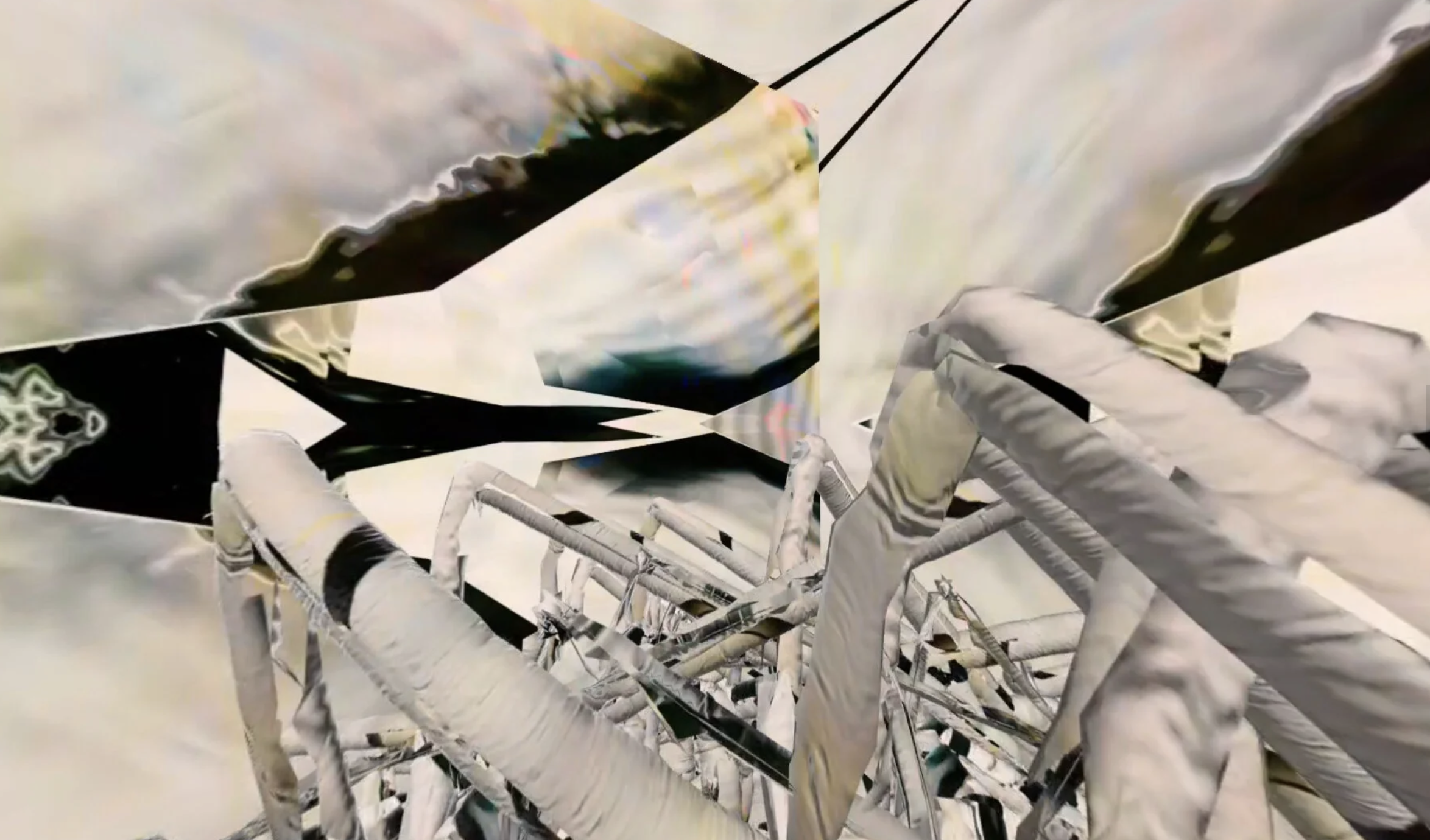
Evolved Photography: The Image-Sphere, The Terminal and Comprehending Closed System Ecologies
A conference paper introducing the "Image-Sphere" as a framework for understanding 360° media as a distinct photographic form.
A conference paper co-written with Off Site Project and presented at DRHA, Humboldt University, Berlin. Introduces the "Image-Sphere" as a framework for understanding 360° media as a distinct photographic form — one that dissolves the directional hierarchy of traditional photography and instead positions the viewer within a closed-system ecology. Uses The Terminal: Human Shaped Whole, a looping 360° group exhibition directed by Jason Isolini and curated by Off Site Project at anonymous gallery, NYC, as a case study for how immersive media can model the tensions between individual authorship, automated systems, and ecological thinking.
2021
Through the Image-Sphere — A Photographic New Media (MFA Thesis)
MFA thesis connecting spherical photography to shifts in capitalism, authorship, and embodied cognition— drawing on Virilio, Flusser, and McLuhan.
Develops the "Image-Sphere" as a framework for understanding 360° photography as both an evolution of the camera apparatus and a metaphor for shifting economic structures — from the directional hierarchy of SLR photography and vertical capitalism to the distributed, ecological logic of spherical media and lateral economies. Draws on Virilio, Flusser, McLuhan, Rifkin, and Fuller to argue that the Image-Sphere represents a fundamental cognitive shift in how we understand space, authorship, and embodiment in virtual environments.
School of the Art Institute of Chicago, 2021